Last Updated: October 25, 2026
Quick Summary
Metal railing installation cost depends on three core elements: material selection, design complexity, and site conditions. Wrought iron commands higher prices due to hand-forged craftsmanship, while stainless steel suits modern properties and coastal environments, and aluminium offers the most affordable option for budget-conscious projects.
- Wrought iron railings last 50+ years when properly maintained and suit period properties requiring ornamental detail.
- Labour costs vary dramatically based on site access, project complexity, and whether work involves heritage properties or restricted spaces.
- Stainless steel requires minimal maintenance and resists corrosion without additional coatings, making it economical over its lifespan.
- UK Building Regulations set mandatory safety standards including minimum heights and baluster spacing that all installations must meet.
- A detailed site survey catches cost-affecting variables like uneven surfaces and structural issues before fabrication begins.
Table of Contents
- What Influences Metal Railing Installation Cost
- Steel Railing Cost Factors and How They Impact Your Quote
- Material Pricing: Wrought Iron, Stainless Steel, and Aluminium
- Metal Handrail Installation Cost and Labour Charges
- The Metal Railing Installation Process and Timeline
- Building Regulations, Permits, and Safety Requirements
- How to Obtain a Bespoke Metal Railings Quote
- Frequently Asked Questions
What Influences Metal Railing Installation Cost
The true cost of a metal railing installation goes well beyond a simple per-foot figure. Homeowners and property managers who understand the variables make better decisions and avoid surprises when quotes arrive.
Three core elements shape every estimate: material, design complexity, and site conditions. Explore our bespoke metal gates and railings in London to see the full range of custom metalwork we design and install for properties across the region. A straightforward steel railing on a standard staircase bears little resemblance to a bespoke wrought iron balustrade with ornamental details, even if both span the same distance, the difference lies in fabrication time, installation difficulty, and long-term performance.
Material selection and durability
The metal you select is often the single largest cost driver. Wrought iron, mild steel, stainless steel, and aluminium each come with different price points, fabrication requirements, and durability characteristics. Wrought iron railings allow for ornamental details and curves that machinery struggles to replicate.
Durability directly affects lifecycle cost. Consider not just fabrication cost but maintenance burden and expected lifespan in your environment.
Design complexity and fabrication
A simple, straight railing with standard posts and horizontal rails fabricates quickly and costs less. Curves, angles, ornamental panels, forged details, or custom post tops increase fabrication time and price.
Victorian and Edwardian properties in London often call for period-appropriate scrollwork, finials, or decorative panels, while modern developments demand minimalist designs with clean lines and integrated glass panels.
Steel Railing Cost Factors and How They Impact Your Quote
When preparing a metal railing installation cost estimate, materials, labour, and the unique conditions of your project are calculated. A railing running straight up a uniform staircase is straightforward; one navigating a curved balcony, connecting to existing masonry, or fitting a heritage property with restricted access is far more complex.
Linear footage and project scope
Length is the first number in any estimate, but rarely the only one. A longer project often allows economies of scale, with multiple panels fabricated in sequence and installed more efficiently.
Scope extends beyond length. Bundling multiple elements, railings on several staircases, matching gate work, or decorative panels, into one project often reduces the overall cost per item, because fabrication and installation teams work more efficiently without breaking between jobs.
Site conditions and installation difficulty
The physical environment determines how much time and care installation requires. A standard interior staircase in good condition is straightforward.
Site preparation matters too. If the substrate is sound and level, work can proceed quickly; if rotting timber, crumbling mortar, or structural issues are discovered, remedial work becomes necessary. A proper site survey before quoting catches these variables early and prevents cost overruns later.
Finish options and protective coatings
How you protect your railing shapes both cost and longevity. Galvanisation, dipping steel in molten zinc, provides excellent corrosion resistance economically. Powder coating adds colour and finish options while protecting the metal.
Finish affects both installation cost and maintenance: galvanised railings need little upkeep, while painted finishes may require repainting every 5-10 years depending on exposure. Understanding these trade-offs helps you evaluate true lifecycle cost, not just today’s quote.
Material Pricing: Wrought Iron, Stainless Steel, and Aluminium
Different materials serve different purposes, and understanding why one costs more than another helps justify the investment when you receive your metal railing installation cost estimate.
Wrought iron railings
Wrought iron is the premium choice for period properties and customers who value ornamental detail and traditional craftsmanship.
Wrought iron develops a distinctive patina many owners appreciate, but must be protected with paint or powder coating to prevent rust. Learn how to prevent rust on metal railings and maintain your chosen material for decades to come.
Stainless steel railings
Stainless steel offers a modern aesthetic and corrosion resistance, ideal for coastal properties, commercial kitchens, or any high-moisture environment. It costs more than mild steel and requires different fabrication techniques, but offers minimal maintenance and a clean, contemporary look.
Stainless steel suits modern developments, minimalist interiors, and low-maintenance properties. The initial cost is higher, but over its lifespan, reduced maintenance can make it an economical choice.
Aluminium railings
Aluminium is the most affordable and lightest material to handle during installation.
Aluminium works well for modern residential properties, commercial buildings, and temporary installations, a sensible choice when budget is the primary concern and the aesthetic must be contemporary.
Each metal brings distinct advantages, costs, and maintenance profiles to your railing project.
| Material | Best For | Key Characteristics |
|---|---|---|
| Wrought Iron | Period properties and ornamental detail | Hand-forged, requires paint or powder coating, lasts 50+ years |
| Stainless Steel | Coastal and high-moisture environments | Corrosion resistant, minimal maintenance, contemporary aesthetic |
| Aluminium | Budget-conscious and commercial projects | Lightest, most affordable, rust-free, low maintenance |
Metal Handrail Installation Cost and Labour Charges
Labour is the second-largest cost component in any metal railing installation. The complexity of your project, site conditions, and the number of people required on site all affect the final labour bill.
Labour and professional installation
Professional installation ensures your railing meets UK Building Regulations, performs safely under load, and integrates properly with your property’s structure. Installation labour typically covers measurement and fitting, securing posts, aligning rails, and finishing work like capping and painting.
Time varies dramatically: a straightforward staircase railing might take a day, while a multi-level balustrade with curves and ornamental details could take three to five days. Heritage properties, restricted access, or on-site custom fabrication extend timelines further. When comparing quotes, check what’s included, some contractors include site cleanup and finishing, others charge separately.
Travel and site access considerations
We serve properties across London and the surrounding areas, and travel time affects cost. Restricted access, a narrow stairwell, a property only reachable by foot, or a location requiring parking permits all make installation slower and more labour-intensive.
Weather and season also play a role: winter work on exterior railings may require additional safety measures and protective equipment, while summer projects are often faster.
The Metal Railing Installation Process and Timeline
Understanding the process from measurement to completion helps you plan your project and anticipate when disruption will occur.
Measurement, design approval, and fabrication
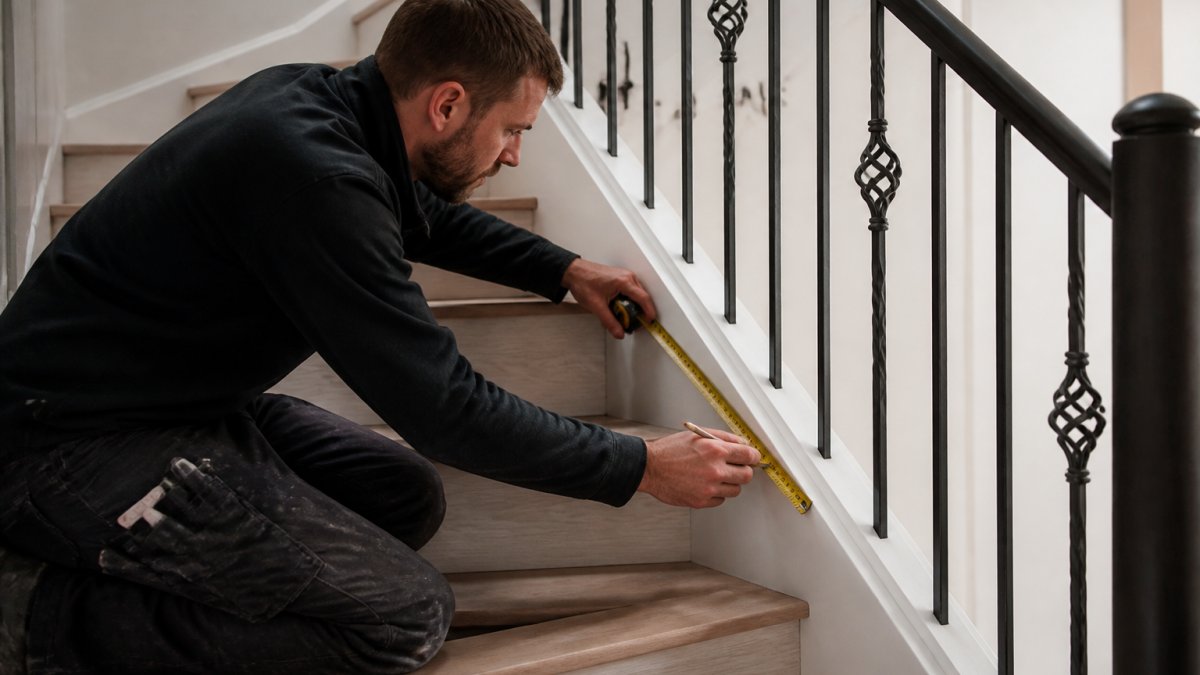
The process begins with a detailed site survey: exact dimensions are measured, the substrate is assessed, structural issues are identified, and design preferences are discussed.
Once measurements are confirmed, a design drawing is created for your approval, your chance to refine details, choose finishes, and ensure the design matches your vision and property’s architecture.
Site preparation and installation
Before installation we prepare the site: protecting floors, setting up safety barriers, and organising tools and materials.
After installation, the railing is tested under load to ensure it meets safety standards, the site is cleaned up, and maintenance guidance is provided. The entire process from survey to completion typically spans 6-10 weeks for standard projects.
Building Regulations, Permits, and Safety Requirements
Metal railings must comply with UK Building Regulations, which set safety standards for load capacity, height, and baluster spacing.
Building Regulations Approved Document K covers protective barriers and handrails.
Depending on your project’s scope and your property’s status, you may need planning permission or building control approval, with stricter requirements for listed buildings and conservation areas.
How to Obtain a Bespoke Metal Railings Quote
A proper metal railing installation cost estimate is based on a site survey, not a phone call or email description. Here’s what a professional quote process looks like.
What to include in your quote request
When you contact us, provide as much detail as possible: property type (residential, commercial, listed building), railing location (interior staircase, exterior balcony, deck), material, design preferences, and timeline.
Be clear about what you want: replacing an existing railing or installing new, matching gate work or additional elements, and any heritage or architectural considerations.
Comparing estimates and verifying scope
When comparing quotes from multiple providers, ensure you’re comparing like with like.
Ask each provider to explain their approach to site conditions, finish options, and timeline.
Verify the scope matches UK Building Regulations and includes any required permits or approvals.
Get a free metalwork quote for bespoke gates, railings and balustrades in London.
Frequently Asked Questions
What factors have the biggest impact on metal railing installation cost?
The primary factors affecting metal railing installation cost are material choice (wrought iron, stainless steel, or aluminium), linear footage required, design complexity, site conditions, and finish specification. Labour and travel time also influence the final estimate. A simple straight section of aluminium railing costs significantly less than ornamental wrought iron with bespoke details. Site access, existing structural conditions, and whether removal of old railings is needed all add to the project scope and timeline.
How much does it cost per linear foot for a metal handrail installation?
Metal handrail installation cost per linear foot varies widely based on material, design, and complexity. Aluminium handrails are generally the most economical option, while stainless steel and wrought iron command higher per-foot costs due to material expense and labour intensity. Ornamental or bespoke designs with forged details increase costs further. Rather than relying on generic per-foot figures, obtain a bespoke metal railings quote from a fabricator who can assess your specific requirements, site conditions, and design preferences.
How do I know if my metal railing estimate is accurate and fair?
A comprehensive estimate should itemise fabrication costs, material costs, labour, site preparation, installation, and any finishing work. Verify the quote includes a detailed site assessment, design approval process, and clear timeline. Ask what is covered and what incurs additional charges. Compare multiple estimates, but prioritise detail and transparency over price alone. Ensure the contractor references UK Building Regulations compliance and uses quality galvanised or powder-coated finishes. Request references from previous projects to verify workmanship and reliability.
What should a bespoke metal railings quote include?
A complete quote should cover fabrication of all metal components, material costs for your chosen finish (galvanised, powder-coated, or stainless), labour for installation, site preparation (removal of existing railings if applicable), and any structural modifications needed. It should specify the railing type (stair, deck, handrail, or balustrade), linear footage, design details, and installation timeline. The quote should also confirm compliance with UK Building Regulations and specify warranty or aftercare. Reputable fabricators conduct a free site survey before quoting to ensure accuracy.
Does galvanised or powder-coated finish affect the installation cost?
Yes, the finish specification influences both material and labour costs. Galvanising provides long-lasting corrosion protection and is cost-effective for most applications. Powder coating offers colour choice and aesthetic flexibility, adding to material costs. Stainless steel requires no additional coating but costs more upfront. The finish choice also affects maintenance requirements over the railing’s lifetime. Discuss finish options with your fabricator to understand the cost-benefit trade-off for your specific location, climate exposure, and aesthetic preferences.
How long does metal railing installation typically take?
Timeline depends on project scope, design complexity, and site conditions. A straightforward installation of standard sections may take one to two days on-site, while bespoke designs with ornamental details require additional fabrication time before installation. Custom work typically involves measurement and design approval (one to two weeks), fabrication (two to four weeks depending on complexity), and on-site installation (one to three days). Tight deadlines are possible but may incur additional costs. Discuss your timeline during the initial consultation so the fabricator can plan accordingly.
Are metal railings more durable than other materials, and does that affect long-term cost?
Quality metal railings, particularly galvanised or stainless steel, offer exceptional durability and weather resistance, making them cost-effective over their lifetime. Galvanised mild steel resists rust and corrosion for decades with minimal maintenance. Stainless steel requires even less upkeep. Wrought iron, when properly finished, is equally long-lasting. Compare initial installation cost against maintenance burden and replacement frequency of alternatives. Metal railings’ durability means fewer repairs and replacements, reducing total cost of ownership despite higher upfront investment. This makes them a sound investment for residential and commercial properties.
