Last Updated: November 7, 2026
Quick Summary
Custom metalwork costs more because every piece starts from zero, so the fabricator carries all the setup, design and rework on a single job instead of spreading it across a large production run. Material choice, design complexity, skilled labour hours and finish requirements also add up. Comparing quotes on scope, materials, finishes and warranty helps show where the value lies.
- Mass-produced items spread setup costs across thousands of units; a bespoke piece carries them alone.
- Galvanised steel costs more up front but adds long-term rust protection for outdoor railings and gates.
- Curves, repeating patterns, visible welds and tight fits each add skilled labour hours.
- Compare quotes on scope and exclusions, materials, finishes, tolerances, installation and warranty.
- Ask for a free site survey so your measurements and requirements are assessed before pricing.
Table of Contents
- Why Custom Metalwork Costs More Than Mass-Produced Products
- Custom Metalwork Cost Factors: Materials and Raw Stock
- Design Complexity and Skilled Labour Hours
- The Metal Fabrication Process and Where Time Goes
- Galvanised Steel vs Mild Steel: Cost Against Long-Term Value
- Finishes, Tolerances and Quality Control
- Comparing Bespoke Quotes and Requesting Your Free Site Survey
- Frequently Asked Questions
Why Custom Metalwork Costs More Than Mass-Produced Products
Custom metalwork costs more because every piece starts from zero. A mass-produced gate is made thousands of times over, so the factory spreads its setup costs across a huge run. A bespoke gate for your front garden is made once, to your measurements, and the fabricator carries all of that setup effort on a single job.
Customers often compare a bespoke quote with a catalogue product and wonder why the gap is so wide. The answer is rarely one big thing. It is a set of smaller costs that add up.
Mass production wins on volume. Custom work wins on fit, finish and durability. Once you see where the money goes, the price makes more sense, and you can decide which trade-offs matter most for your property.
Custom Metalwork Cost Factors: Materials and Raw Stock
Material is the first cost you can see. The steel, iron or stainless steel bar you order is the starting point for everything else.
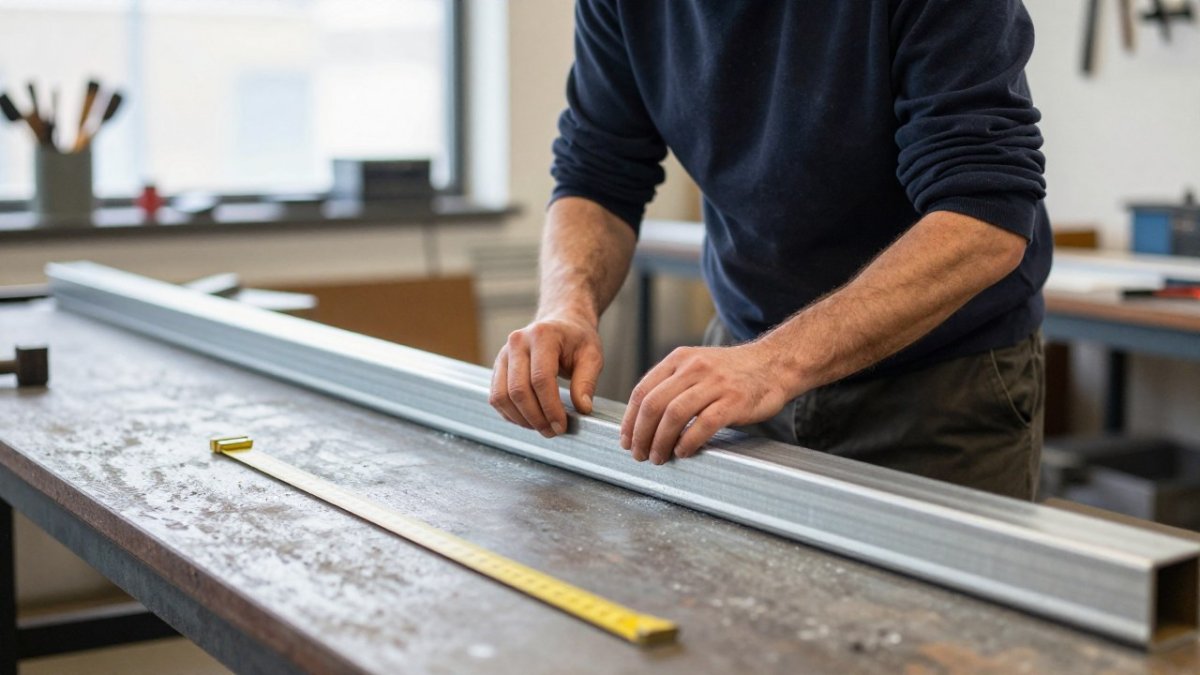
Raw stock is bought in standard lengths and sizes. When your design needs a size that is not held in stock, the fabricator may have to buy a larger section and cut it down. The offcut is usually wasted, and that waste is part of your bill.
Common material choices affect the price in different ways:
- Mild steel: Usually the most cost-effective starting point for railings and gates.
- Galvanised steel: Costs more than plain mild steel, but adds long-term protection against rust.
- Stainless steel: Often the most expensive option, chosen where appearance or corrosion resistance matters most.
- Decorative or forged elements: Priced by the time and skill they need, not just the weight of the metal.
If you are unsure which material suits your site, ask for quotes on two options. Comparing them side by side shows where the extra cost buys real benefit.
Design Complexity and Skilled Labour Hours
Design complexity is often the biggest driver of labour time. A simple straight railing with uniform spacing takes far less skilled work than a scrolled balustrade with curved sections.
Think about these design features, because each one adds time:
- Curves and bends: Each curve needs setting out, forming and checking.
- Repeating patterns: Matching every panel takes care and measurement.
- Joins and welds: Every visible weld must be cut, fitted, welded and finished.
- Bespoke details: Hand-finished scrolls, finials or custom brackets need skilled craftsmen.
- Tight fits: Irregular walls or stairs mean more measuring and adjustment on site.
A common mistake is adding decorative details late in the design process. A small change at that stage can add more hours than expected. If you want to control the cost, decide on your key features early and keep the rest of the design simple.
The Metal Fabrication Process and Where Time Goes
Fabrication is a sequence of steps, and each one takes time. Knowing the steps helps explain why a quote looks the way it does, but the real cost driver is not the cutting or the welding alone. It is the preparation that happens before a single bar is cut, and the rework that happens when something does not fit.
A typical job moves through these stages:
- Survey and measuring: Accurate measurements prevent costly rework later. On an irregular Victorian stair or a wall that is not plumb, this can take longer than the fabrication itself.
- Design and drawings: Sketches or drawings confirm the layout before any metal is cut. This is non-recurring engineering: the drawing work is done once for your job and cannot be spread across a production run.
- Setting up machines and tooling: Press brakes, bandsaws, welders and bending rolls must be set for each new section size and bend radius. A mass-production line sets up once and runs for weeks; a bespoke job may set up several times in a single day.
- Cutting and forming: Bars and sections are cut, bent and shaped to the design. Each new angle or radius needs a test piece and a check against the drawing.
- Welding and assembly: Parts are joined and checked for alignment. Visible welds on balustrades and gates must be dressed back so the joint disappears under the finish.
- Finishing: Grinding, cleaning and surface preparation come before coating. Any weld spatter or mill scale left behind will show through a powder coat.
- Coating or galvanising: Protective finishes are applied and need time to cure. Galvanising involves a separate dip process and its own handling.
- Delivery and installation: Pieces are transported and fixed on site, often with adjustments for the real opening rather than the drawn one.
Setup time is the hidden cost. Machines and tools often need preparing for each new job, even a small one. That is why a single one-off piece can cost more per item than a larger run: the setup is carried by one piece instead of fifty. The same applies to jigs and templates.
Watch out: a design that looks simple on paper can force repeated setups if every panel is a slightly different size. Standardising panel widths and using repeatable parts cuts setup time without changing how the finished work looks.
Tolerances add time at every stage. A tight tolerance means more measuring, more checking and sometimes more reworking. Quality checks typically cover alignment, weld quality, square and level frames, and the consistency of the finish. These steps take time, but they stop problems showing up after installation, when correcting them is far more expensive.
If you want to understand a quote, ask which stages carry the most setup and which parts of the design are repeatable.
Galvanised Steel vs Mild Steel: Cost Against Long-Term Value
Choosing between galvanised steel and plain mild steel is one of the clearest cost decisions you will make. Galvanised steel costs more up front. It is coated with zinc, which protects the metal from rust, especially outdoors.
Plain mild steel is cheaper to buy and fabricate. It can be powder coated for a good finish, but it relies more on the coating staying intact. Scratches or chips can let rust start, so it may need more maintenance over time.
Here is a simple way to weigh the choice:
- Choose galvanised steel if the railing or gate sits outdoors, near the coast, or in a damp location.
- Choose mild steel if the item is sheltered, decorative and easy to maintain.
- Ask about combining both: galvanise the structure and powder coat the visible finish for colour.
Think about the total cost over the life of the product, not only the first invoice.
Finishes, Tolerances and Quality Control
Finishes and tolerances affect both price and performance. A tight tolerance means the parts must fit within a very small margin of error. That takes more measuring, more checking and sometimes more reworking.
Quality control is part of the price, and it is worth paying for. Checks typically cover alignment, weld quality, square and level frames, and the consistency of the finish. These steps take time, but they stop problems showing up after installation.
Finish choice also matters. A smooth, even powder coat needs careful preparation. Textured or multi-stage finishes take longer. If the finish must match an existing colour or architectural style, expect some extra work to get it right.
Ask your fabricator how they check quality at each stage.
Comparing Bespoke Quotes and Requesting Your Free Site Survey
Bespoke quotes are hard to compare because each one reflects a different design, and the lowest headline figure is rarely the best value. If you are new to ordering gates, our guide to buying custom metal gates sets out what to ask for.
Before you request quotes, prepare a short brief. Note the opening dimensions, the height required, whether the work is indoors or outdoors, the material you prefer, the finish you want, and any access restrictions such as a shared hallway or a narrow side return.
When the quotes arrive, compare them on these points:
- Scope and exclusions: Does the quote state what is included and, just as importantly, what is not? Making good after installation, removing an old railing, and electrical work for gate automation are common exclusions.
- Materials specified: Check the grade and section sizes, not just “steel”. Mild steel, galvanised steel and stainless steel behave differently outdoors and near the coast.
- Finishes: Confirm whether the finish is powder coat, galvanising, or both, and whether preparation and priming are included.
- Tolerances and standards: Ask what tolerance the work is built to and whether it is designed to meet the relevant UK Building Regulations and safety standards for the application, such as guarding heights and balustrade loading.
- Installation and access: Confirm whether installation is included, who is responsible for fixings, and how access and parking are handled.
- Warranty and aftercare: Ask what the guarantee covers and how long it runs.
- One-time versus recurring costs: Distinguish design, drawing and setup charges, which are paid once, from the per-piece fabrication cost. A small job can look expensive per item because the one-time costs are spread over very few pieces.
The most reliable way to get an accurate price is a site survey. We can arrange a free site survey and quote for your project. During the visit the space can be measured and the factors affecting cost explained.
If you are still choosing a supplier, a useful first step is to request a free metalwork quote for your project and see how the process works. You can also read more about galvanised and powder-coated metalwork in London to compare finishes before you decide.
Quotes can differ widely, so comparing them on the same points makes the choice clearer.
| Comparison point | What to check | Why it matters |
|---|---|---|
| Scope and exclusions | What is included and what is not | Making good and removal are often excluded |
| Materials specified | Grade and section sizes, not just “steel” | Mild, galvanised and stainless steel behave differently outdoors |
| Finishes | Powder coat, galvanising, or both | Confirms preparation and priming are covered |
| Tolerances and standards | Build tolerance and UK safety standards | Affects fit and guarding compliance |
| Installation and access | Who fixes, and how access is handled | Access can change the final price |
| Warranty and aftercare | What the guarantee covers and for how long | Shows long-term value |
| One-time versus recurring costs | Design and setup charges versus per-piece cost | Small jobs look expensive per item |
Every project we take on is made to measure, so the final price reflects your site and your design. When you are ready, get in touch with Metal Railings London for a free site survey and a clear, itemised quote.
Frequently Asked Questions
Why does custom metalwork cost more than mass-produced metalwork?
Custom metalwork is made for one project, so the cost of design, setup and skilled labour is spread over a single item rather than thousands. Mass-produced products benefit from economies of scale, automated tooling and repeat runs. Bespoke work also needs measuring on site, individual drawings and hand finishing, each of which adds time. The price difference reflects that the item is made to fit your opening exactly rather than a standard size.
What factors affect the cost of metal fabrication?
The main factors are the type and thickness of metal, the size and number of components, the complexity of the design, the amount of cutting, welding and forming required, and the finish you choose. Installation conditions, such as access and the fixing method, also play a part. Pricing depends on these variables together, so the most reliable figure comes from a bespoke quote after a site survey rather than a generic estimate.
Is galvanised steel more expensive than mild steel?
Galvanised steel usually costs more at the outset than untreated mild steel because the zinc coating is an additional process. However, galvanising protects the steel from corrosion, so it often delivers better value over the life of an external railing or gate, particularly in London’s damp and polluted conditions. Mild steel can suit internal or sheltered work when finished with powder coating. Your choice depends on the location and the level of exposure.
