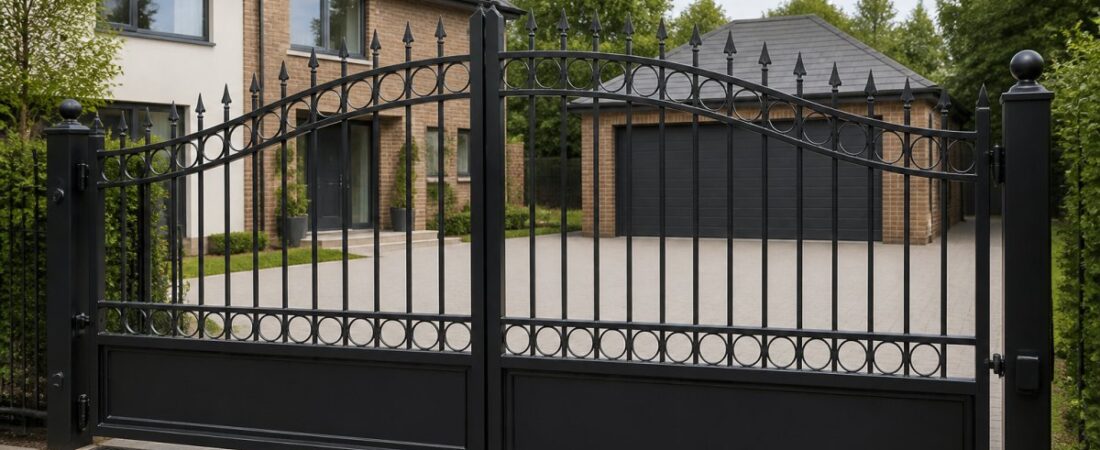
Table of Contents
- Why Choose Custom Metal Gates Over Standard Options
- Made to Measure Metal Gates: Sizing and Design Flexibility
- Material Choices: Wrought Iron, Mild Steel, and Stainless Steel
- Galvanised Steel Gates for Long-Term Durability
- Metal Driveway Gates: Residential Security and Aesthetics
- Metal Gate Installation: What to Expect and How to Prepare
- Cost Factors and What Influences Your Final Quote
- Maintenance and Long-Term Care for Metal Gates
- Frequently Asked Questions
Last Updated: October 18, 2026
Why Choose Custom Metal Gates Over Standard Options
When you’re investing in your property’s entrance, the difference between a standard gate and a bespoke one comes down to fit, durability, and design. Standard off-the-shelf gates force you to adapt your space to their dimensions. Custom metal gates do the opposite, they’re manufactured to match your exact requirements, your architectural style, and your security needs.
At Metal Railings London, we work with homeowners and commercial clients who seek bespoke solutions. Custom fabrication, while requiring more planning upfront, delivers superior results. A made-to-measure metal gate fits perfectly the first time. It won’t rattle, won’t require expensive adjustments, and won’t compromise your property’s aesthetic.
The real advantage emerges over time. Bespoke gates manufactured from galvanised steel or stainless steel with professional powder coating last decades with minimal upkeep. You’re not just buying a gate, you’re investing in a solution tailored to your property’s unique conditions.
Made to Measure Metal Gates: Sizing and Design Flexibility
Made-to-measure metal gates offer complete freedom in dimensions and design. Whether your opening is an awkward width, your entrance requires a specific height for security purposes, or you need a gate that complements Victorian stonework, custom fabrication accommodates every requirement.
The sizing process begins with precise measurement. Our team takes exact dimensions of your entrance, accounting for slope, ground conditions, and any architectural features. This precision eliminates the common problem of gaps or misalignment that plague standard gates. A made-to-measure gate aligns perfectly with your existing walls, pillars, or fencing.
Design flexibility extends beyond dimensions. You can specify ornamental detailing, choose between decorative scrollwork or clean modern lines, and decide whether you want a solid infill or open framework. Clients can combine practical security features, like anti-climb details or reinforced locking mechanisms, with aesthetic elements that enhance their property’s character. This balance between function and appearance is where custom design excels.
The manufacturing process captures your exact specifications. Every measurement, every design choice, every finish preference gets documented and built into your gate. When installation arrives, there’s no guesswork, no compromise.
Material Choices: Wrought Iron, Mild Steel, and Stainless Steel
Your material choice determines durability, maintenance requirements, and aesthetic character. Each option serves different purposes and environments.
Wrought iron delivers traditional elegance and exceptional longevity. It’s hand-forged and worked, creating gates with genuine character. Wrought iron gates develop a protective patina over time and, when properly maintained, can last over a century. The material is ideal for period properties or clients seeking authentic craftsmanship. Its weight and strength make it excellent for security applications. The downside is maintenance, wrought iron requires regular attention to prevent rust.
Mild steel offers versatility and strength at a practical cost point. It’s the most common choice for modern custom gates because it accepts finishes beautifully and can be fabricated into virtually any design. Mild steel gates are lighter than wrought iron, easier to install, and work well with both contemporary and traditional aesthetics. Without protective coating, mild steel will rust, which is why finishing is critical.
Stainless steel provides the lowest maintenance option. It resists corrosion naturally, requires minimal upkeep, and maintains its appearance for decades. Stainless steel is ideal for coastal properties, high-moisture environments, or clients who prioritize convenience over traditional character. It costs more than mild steel but eliminates ongoing maintenance concerns.
The material you choose should reflect your property’s environment, your maintenance commitment, and your design preferences. Each material can be finished to enhance its natural properties and protect against weathering.
Galvanised Steel Gates for Long-Term Durability
Galvanisation is the most effective protection for steel gates in the UK climate. The process involves coating steel with a layer of zinc, which acts as both a barrier and a sacrificial layer. When scratches or damage expose the underlying steel, the zinc continues to protect it, a process called cathodic protection.
Galvanised steel gates resist rust for 20-30 years or longer, depending on environmental exposure. In urban areas with salt-laden air or near coastal regions, galvanisation proves invaluable. The zinc layer doesn’t just prevent rust; it extends the life of the entire structure, meaning your investment remains secure and functional far longer than unprotected steel.
The galvanisation process is industrial and standardised, meeting British Standards for hot-dip galvanizing specifications. After galvanising, your gate emerges with a distinctive grey-silver finish. Many clients choose to powder coat over the galvanised base, combining two layers of protection with their preferred colour.
Maintenance of galvanised gates is straightforward. Annual rinsing with clean water removes salt deposits and dust. Unlike painted finishes that chip and require repainting, galvanised coatings remain protective even when worn. This durability makes galvanised steel the sensible choice for gates exposed to harsh weather or salt spray.
Metal Driveway Gates: Residential Security and Aesthetics
Metal driveway gates serve dual purposes: they secure your property and define your entrance. A bespoke metal driveway gate makes an immediate statement about your home while providing genuine security benefits.
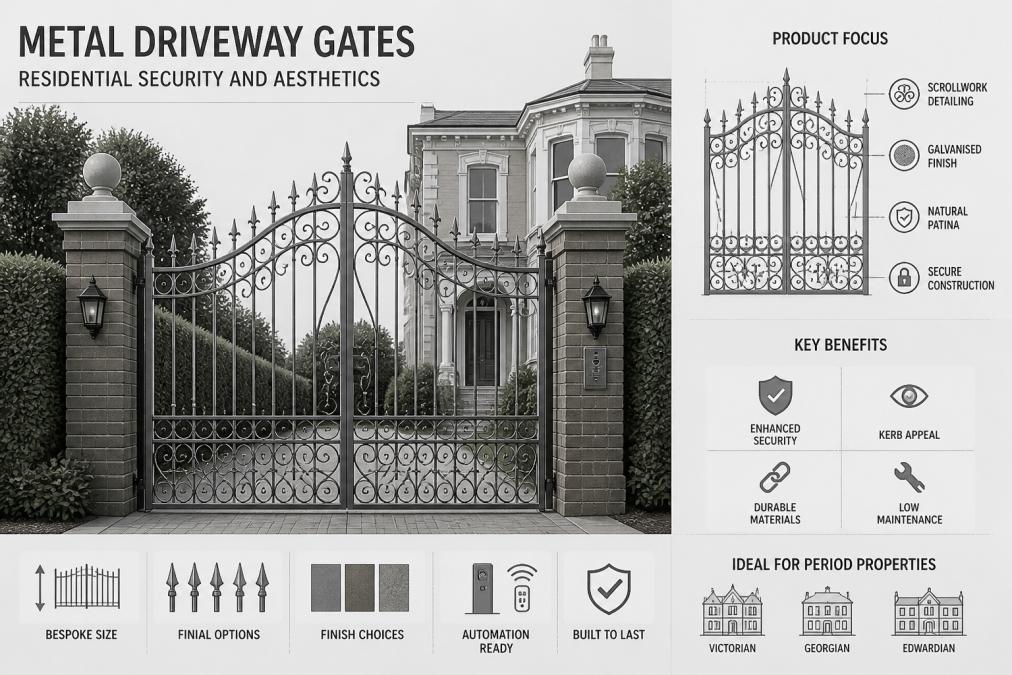
Residential driveway gates range from open designs, where decorative metalwork is visible through the gate, to solid infill panels that obscure the property interior. The choice depends on your security requirements and aesthetic preferences. Many homeowners opt for partial infill, combining solid lower sections with ornamental upper sections. This approach maximises privacy while maintaining visual interest.
Security features in custom driveway gates include anti-climb design, reinforced frames, and heavy-duty locking mechanisms. A properly designed gate makes unauthorised access significantly more difficult. The psychological deterrent of a substantial metal gate often prevents attempted entry before security features are tested.
Aesthetically, your driveway gate reflects your property’s character. Period properties suit traditional wrought iron or mild steel with ornamental details. Contemporary homes work well with clean-lined designs, horizontal bars, or minimalist frameworks. The gate becomes part of your property’s curb appeal, influencing how visitors perceive your home.
Installation of driveway gates requires careful planning. Ground conditions, slope, existing pillars, and traffic patterns all influence the design. A professional survey ensures your gate operates smoothly, clears vehicles safely, and integrates with your property’s layout.
Metal Gate Installation: What to Expect and How to Prepare
Professional installation transforms a beautifully fabricated gate into a functioning security feature. The process involves site preparation, structural work, hanging, and testing.
Before installation, our team conducts a detailed site survey. We assess ground conditions, measure existing structures, check for underground utilities, and identify any obstacles. This preparation prevents costly surprises during installation. If your entrance sits on a slope, requires reinforced posts, or needs additional groundwork, we identify these requirements upfront.
Installation typically involves:
- Preparing the ground and setting concrete footings for gate posts
- Installing sturdy posts, ensuring they’re perfectly vertical and secure
- Hanging the gate on heavy-duty hinges, checking alignment and clearance
- Fitting locks, latches, and any automation equipment
- Testing operation through multiple cycles to ensure smooth function
- Making final adjustments to hinges and catches
The timeline varies depending on complexity. A straightforward residential gate installation might take one day. More complex projects, particularly those requiring significant groundwork or automation, may take longer.
Preparation on your part is minimal but important. Ensure access to the installation area is clear. If you have existing gates or fencing to be removed, coordinate timing with our team. Inform us of any underground services, water pipes, electrical lines, drainage, that might affect post placement.
Weather affects installation. We schedule work during dry conditions when possible, as concrete footings need time to cure properly. Rain or frost can delay work, but our team plans around seasonal factors.
Cost Factors and What Influences Your Final Quote
Pricing for custom metal gates depends on several variables. Understanding these factors helps you anticipate investment levels and make informed decisions.
Gate dimensions significantly influence cost. Larger gates require more material and more complex fabrication. A narrow pedestrian gate costs considerably less than a wide driveway gate. Height also matters, taller gates need stronger frames and more reinforcement.
Material selection affects pricing. Mild steel offers good value and versatility. Stainless steel costs more but eliminates maintenance concerns. Wrought iron, when hand-forged, represents a premium investment but delivers authentic character and exceptional longevity.
Design complexity determines fabrication time and skill required. A simple rectangular frame with horizontal bars costs less than ornamental scrollwork, decorative panels, or custom forged details. The more intricate your design, the more fabrication hours involved.
Finish specification influences the final cost. A basic galvanised finish costs less than powder coating. Multi-layer finishes, galvanised base plus powder coat, provide superior protection but increase investment. Custom colours may require additional preparation.
Installation requirements vary by site. Simple installations on level ground with straightforward access cost less than complex projects requiring significant groundwork, slope compensation, or utility relocation. If existing structures need removal or if your site has challenging access, installation costs increase.
Automation and accessories add to the total. Electric opening systems, intercoms, access control, or smart locks represent additional investment. These features enhance convenience and security but are optional additions to a basic gate.
Rather than fixed pricing, we recommend requesting a bespoke quote. Our team assesses your specific requirements, dimensions, material, design, site conditions, and desired features, and provides transparent pricing reflecting your exact needs.
Maintenance and Long-Term Care for Metal Gates
Proper maintenance extends your gate’s lifespan and keeps it functioning smoothly. The maintenance required depends on your material choice and environmental exposure.
Galvanised steel gates require minimal maintenance. Annual rinsing with clean water removes salt deposits and environmental contaminants. In coastal areas or high-pollution environments, rinse more frequently.
Powder-coated gates need similar care. Rinse annually with clean water and mild detergent. Avoid harsh chemicals or abrasive cleaners that damage the coating.
Wrought iron gates require more attention. Apply a protective oil or wax coating annually to prevent rust. If rust spots develop, remove them with a wire brush and apply rust converter followed by paint.
Hinges and locks on all gates need periodic attention. Lubricate hinges if they squeak or become stiff. Check that locks operate smoothly and consider replacing worn mechanisms before they fail completely.
Automated gates require additional maintenance. Check electrical connections annually, test safety features, and ensure moving parts operate without binding. Keep sensors clean and aligned. Have automated systems serviced professionally every 12-18 months.
Seasonal considerations matter. Before winter, ensure drainage around gate posts so water doesn’t accumulate and freeze. In spring, inspect for winter damage. After storms, check that your gate hasn’t shifted or sustained damage.
Regular maintenance is far more cost-effective than emergency repairs or premature replacement.
Securing your property with the right entrance sets the tone for everything that follows. A custom metal gate that’s precisely fitted, durably finished, and professionally installed protects your home while enhancing its character.
Frequently Asked Questions
What makes bespoke custom metal gates worth the investment?
Custom metal gates are manufactured to your exact specifications, ensuring a perfect fit for your property’s entrance, driveway, or garden boundary. Unlike standard gates, bespoke designs account for your specific dimensions, architectural style, and security requirements. Quality fabrication with galvanised or powder-coated finishes provides durability that outlasts cheaper alternatives. The investment reflects superior craftsmanship, tailored aesthetics, and long-term performance.
How long does it take to manufacture and install made to measure metal gates?
Manufacturing timelines depend on design complexity, material selection, and current order volume. A straightforward made to measure metal gate typically takes several weeks from design approval to completion. Installation itself usually takes one to two days, depending on site conditions and whether groundwork preparation is needed. When planning your project, factor in the design consultation phase and any site surveys required before fabrication begins.
What is the difference between galvanised steel gates and powder-coated finishes?
Galvanised steel gates are dipped in molten zinc, creating a protective layer that prevents rust and corrosion, ideal for exposed outdoor environments. Powder coating applies a coloured protective finish that offers aesthetic flexibility and UV resistance. Many bespoke gates combine both: galvanisation for corrosion protection underneath, with powder coating on top for colour and visual appeal. Your choice depends on your climate exposure, maintenance preferences, and design goals.
Do I need planning permission to install a metal gate at my property?
Planning permission requirements vary depending on your gate’s size, location, and local authority guidelines. Generally, gates under 1 metre in height at a property boundary may not require permission, but this differs across regions and for listed buildings. If your property is listed or in a conservation area, restrictions are stricter. Before commissioning your custom metal gate, check with your local planning authority or discuss this during your consultation to ensure full compliance.