Last Updated: November 10, 2026
Quick Summary
Well-made metal railings typically last 25 to 50 years, and wrought iron can exceed 50 years with the right finish and upkeep. How long metal railings last depends on the base metal, the protective coating, and the environment the railing stands in. Galvanising and regular maintenance extend service life considerably.
- Galvanised and powder-coated mild steel typically lasts 25 to 50 years structurally.
- Wrought iron can exceed 50 years with regular painting and upkeep.
- Aluminium powder-coated railings typically last 20 to 30 years structurally.
- Stainless steel grade 316 performs best in coastal or polluted areas.
- Check fixings, joints and coatings every spring and autumn, and touch up chips promptly.
Table of Contents
- How Long Metal Railings Last in Practice
- Lifespan by Material: Steel, Wrought Iron, Aluminium and Stainless
- How Long Do Steel Railings Last?
- Factors That Shorten or Extend Service Life
- How to Prevent Rust on Metal Railings
- Powder-Coated Metal Railing Maintenance and Inspection
- Repair or Replacement: Booking a Free Site Survey
- Frequently Asked Questions
How Long Metal Railings Last in Practice
Well-made metal railings often last 25 to 50 years, and wrought iron can exceed 50 years with the right finish and upkeep, so the question of how long metal railings last is worth answering before you buy. The real answer depends on the metal, the protective coating, and where the railing stands.
The lifespan figures you will find online come from manufacturers and industry guides, not from long-term independent trials. Treat them as useful benchmarks rather than guarantees. A railing on a sheltered Edwardian terrace will usually outlast one bolted to an exposed seafront wall, even if both are the same material.
Three things decide how long a railing lasts:
- The base metal, and whether it is galvanised before coating
- The finish, typically powder coating or paint
- The environment, including damp, salt, pollution, and direct sun
Get these right at the start and the railing will reward you for decades. Get them wrong and rust can appear within a few years.
Lifespan by Material: Steel, Wrought Iron, Aluminium and Stainless
No single figure covers all metal railings. The table below gives realistic lifespan ranges for the base metal and for the protective coating, because these often fail at different times. The figures assume professional fabrication and installation, and they will shift with the environment and maintenance regime described later.
| Material | Typical structural lifespan (years) | Typical coating lifespan (years) | Key notes |
|---|---|---|---|
| Mild steel (galvanised and powder-coated) | 25-50 | 10-20 | Galvanising is the main corrosion barrier; powder coating adds colour and extra protection. |
| Wrought iron (painted or powder-coated) | 50+ | 10-15 | Very durable base metal, but heavy and requires regular painting to prevent rust. |
| Aluminium (powder-coated) | 20-30 | 15-20 | Naturally corrosion-resistant; powder coating provides colour and surface protection. |
| Stainless steel (marine grade) | 30-50+ | Not applicable (inherent) | Corrosion resistance depends on grade; 316-grade performs best in coastal or polluted areas. |
These ranges are compiled from industry guidance. They are not guarantees: a galvanised steel railing on a sheltered Edwardian terrace may exceed the upper figure, while the same railing on an exposed coastal wall may fall short.
What the table tells you
The structural lifespan is how long the metal itself remains sound. The coating lifespan is how long the finish stays intact before it needs recoating or repair. In practice, the coating often determines when maintenance is needed, but the structural life determines when replacement becomes necessary. For example, a powder-coated aluminium railing may have a structural life of 20-30 years, but its coating may need attention after 15 years. A galvanised steel railing might last 40 years structurally, but its powder coat could fail in 12 years if damaged.
Material-specific considerations
- Mild steel: The most common choice for structural railings. It must be galvanised before powder coating to achieve the lifespan shown. Without galvanising, rust can appear within a few years at cut edges and welds.
- Wrought iron: Often confused with mild steel; true wrought iron is softer and more corrosion-resistant but rarely used today. Most “wrought iron” railings are actually mild steel. When we refer to wrought iron, we mean the traditional style, usually made from mild steel. Its longevity comes from thick sections and regular painting.
- Aluminium: Lightweight and rust-free, but softer than steel. It suits decorative panels and balustrades rather than heavy structural guardrails. Powder coating is essential for colour and surface durability.
- Stainless steel: The best choice for coastal or high-pollution areas. Grade 316 is preferred for exterior railings near the sea. It costs more upfront but avoids the need for galvanising and painting.
Watch out: A common mistake is to compare prices without comparing like-for-like specifications. A cheap mild steel railing with a single coat of paint will not last as long as a galvanised and powder-coated alternative, even though both are described as “steel”. Always ask for the full specification.
If you are unsure which material suits your property, our team can advise during a free site survey. We fabricate bespoke railings in all these materials and can match the style to your building, whether it is a Victorian terrace or a modern development.
How Long Do Steel Railings Last?
Steel railings typically last 25 to 50 years when properly galvanised and coated. Galvanising adds a protective zinc layer that can keep steel sound far longer than paint alone. One industry source notes that galvanised guardrails can last 15 to 20 years longer than painted light-gauge systems (Hilmerson Safety on galvanised guardrail durability).
The lifespan you actually get depends on the finish. A galvanised and powder-coated steel railing in a sheltered spot can perform for decades. The same railing with a chipped coating on a damp, salt-exposed wall will start to rust at the damage point much sooner. Regular checks catch these problems early, which is why inspection matters so much (covered below).
Factors That Shorten or Extend Service Life
Several factors push a railing’s lifespan up or down:
- Protective treatment: Galvanising plus powder coating gives the strongest defence.
- Fabrication quality: Clean welds and sound joints resist water ingress.
- Installation: Poor fixings or trapped water at joints cause hidden corrosion.
- Maintenance: Simple cleaning and touch-ups prevent small problems growing.
- Exposure: Direct weather and wet conditions wear finishes faster.
Climate, coastal air and location
Location matters more than many owners expect. Railings near the coast face salt-laden air that accelerates corrosion. Properties close to busy roads collect grime and road salt in winter, which can break down coatings. Sheltered courtyards and covered porches are kinder. Urban pollution and winter gritting mean even inland railings need periodic attention.
How to Prevent Rust on Metal Railings
Rust prevention comes down to keeping water and oxygen away from bare metal. Start with a galvanised or primed base, then apply a quality powder coat. Powder coating is generally more durable than standard paint because it forms a thicker, tougher finish. Our guide on how to prevent rust on metal railings explains the steps in more detail.
Practical steps that make a real difference:
- Wash railings with mild soap and water every few months to remove salt and grime
- Check welds, joints, and fixings at least once a year
- Touch up any chips or scratches quickly, before rust can spread
- Keep drainage clear so water does not pool at the base of posts
- Avoid abrasive cleaners that strip protective coatings
Acting fast on small damage is the single best habit. A scratch treated within weeks is a five-minute job. Left for years, it can mean replacing sections.
Powder-Coated Metal Railing Maintenance and Inspection
Powder coating is a tough finish, but it is not indestructible. To get the longest service life, you need a simple maintenance schedule and a habit of regular inspection. The schedule below is based on typical London conditions: urban pollution, winter gritting, and occasional coastal exposure if you are near the Thames or further east.
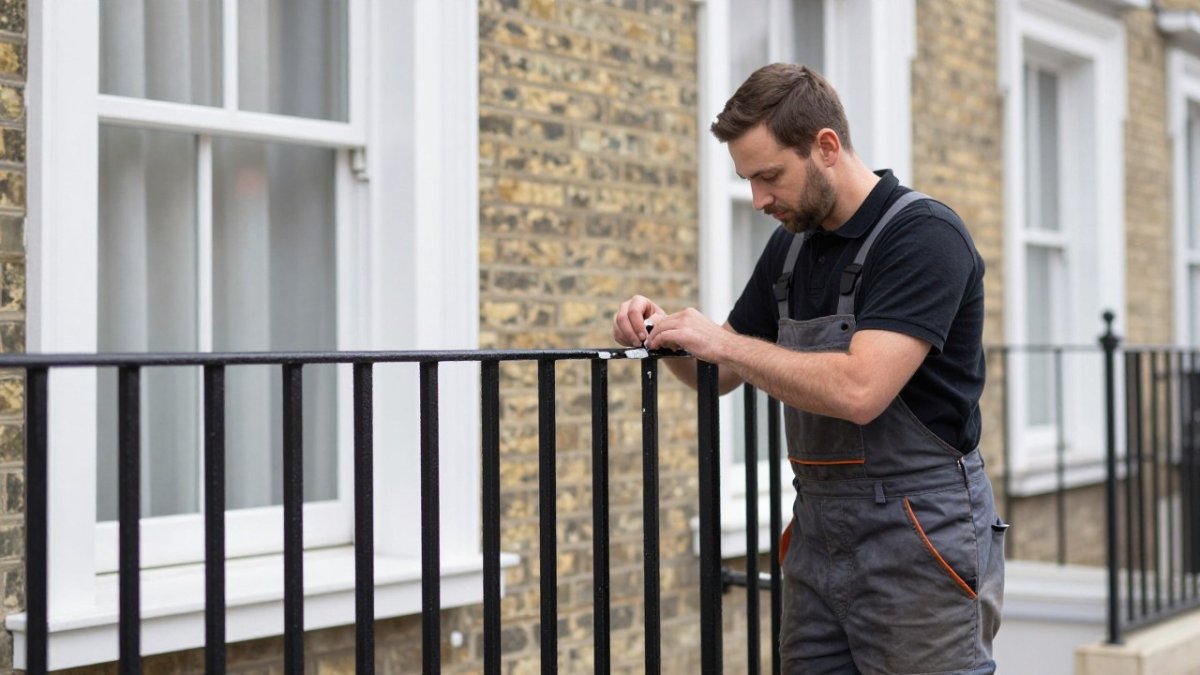
Annual maintenance schedule
| Season | Task | Why it matters |
|---|---|---|
| Spring | Wash all surfaces with mild soap and water; rinse with clean water. | Removes winter grime and salt before it can degrade the coating. |
| Spring | Inspect for chips, scratches, and rust spots; touch up promptly. | Small damage is easy to fix; neglect leads to corrosion under the coating. |
| Summer | Check fixings and joints for tightness; tighten any loose bolts. | Loose fixings let water in and can cause movement that cracks the coating. |
| Autumn | Clear drainage holes and ensure water does not pool at post bases. | Standing water accelerates corrosion at the most vulnerable point. |
| Winter | After gritting, rinse railings if possible to remove salt deposits. | Road salt is aggressive and can break down coatings. |
This is a minimum. If your railings are close to the coast or a busy road, increase cleaning to every three months.
Inspection checklist
Use this checklist during your spring and autumn inspections. It takes about ten minutes for a typical domestic railing run.
- Coating condition: Look for blistering, flaking, fading, or discolouration. These are signs the powder coat is failing.
- Rust: Check for orange-brown staining, especially at welds, cut edges, and base plates. Rust bleeding through the coating means water has penetrated.
- Fixings: Test each bolt and screw for tightness. Loose fixings can allow water ingress and movement.
- Joints and welds: Look for cracks or gaps where water can collect. Clean out any debris.
- Base plates: Ensure water drains away; clear any build-up of soil or leaves.
- Structural movement: Push gently on the railing; it should feel solid. Any wobble suggests a problem with fixings or posts.
Record what you find each time so you can track changes. A small rust spot that grows over two seasons is a warning sign.
Cleaning and touch-up guidance
- Washing: Use a soft brush or cloth with mild detergent. Avoid abrasive cleaners or wire wool, which can scratch the coating.
- Touch-up: For small chips, clean the area, remove any loose coating, and apply a suitable touch-up paint or powder-coat repair kit. Follow the manufacturer’s instructions.
- Larger damage: If the coating is damaged over a significant area, or if rust has set in, professional repair may be needed. Painting over rust without treating it will not stop corrosion.
Watch out: Rust often starts under the coating at welds or cut edges and spreads unseen. If you see bubbles or flaking, have the area assessed rather than simply painting over it.
For a deeper look at how powder-coated railings hold up, read our piece on whether powder-coated steel railings are worth it. We also offer galvanised and powder-coated metalwork in London designed for long-term protection.
If you would like a professional inspection, you can request a site survey and advice on any repairs or maintenance needed.
Repair or Replacement: Booking a Free Site Survey
Not every worn railing needs replacing. Surface rust and small coating damage can often be repaired. Replacement becomes the better option when corrosion has eaten into structural sections, fixings have failed, or the railing no longer meets safety expectations.
The right answer depends on the condition of the metal itself, which is hard to judge from the surface alone. That is why a site survey is worth arranging. You can browse our metal railings range to see the styles and finishes available, or get a free quote today for a bespoke assessment of your property.
Whatever you decide, a properly specified and finished railing is an investment that should serve your property for decades.
Frequently Asked Questions
How long do steel railings last outdoors?
Outdoor steel railings typically last 25 to 50 years or longer with minimal maintenance, according to industry benchmarks. Protective finish is the deciding factor: galvanised steel can last 15 to 20 years longer than painted light-gauge systems, while bare or poorly coated steel will show rust much sooner. Exposure matters too, so railings close to the coast or under heavy road salt need more frequent inspection.
Do galvanised metal railings rust?
Galvanised railings are far more resistant to rust than painted steel because the zinc coating protects the steel even where the surface is scratched. Rust can still appear over time, particularly at welds, cut edges and fixings where the zinc layer is thinner. Checking these points during an annual inspection helps catch early corrosion before it spreads.
Does powder coating prevent railings from rusting?
Powder coating creates a durable, sealed surface that resists moisture and UV exposure, and powder-coated aluminium railings are often cited as lasting 20 years or more. The coating is only as good as its application, though. Chips and scratches expose the metal beneath, so touching them up promptly is what keeps rust from starting.
When should metal railings be replaced rather than repaired?
Repair is usually the right choice when corrosion is limited to the surface or a few isolated spots that can be cleaned, treated and recoated. Replacement becomes more sensible when rust has penetrated the section, welds have weakened, or fixings have loosened. A professional site survey can confirm the condition and give a clear comparison of costs, which depend on the size, material, finish and complexity of the work.
