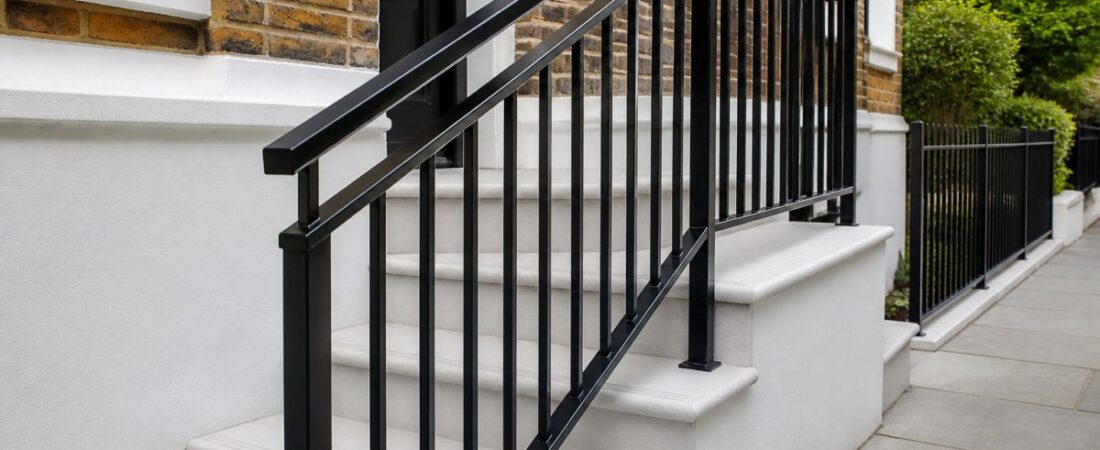
Last Updated: October 30, 2026
Quick Summary
Powder coated steel railings are a durable finish made by electrostatically spraying polymer powder onto steel and curing it into a hard protective skin. The coating itself does not rust, but corrosion can start where it is breached, so good substrate preparation, often galvanising before coating, matters. Choose the finish to suit the exposure the railing faces.
- Powder coating bonds tightly to steel and resists the knocks and weather that railings endure.
- Corrosion usually starts at handrail tops, welds, bolt holes, cut edges and post bases.
- Galvanise then powder coat for coastal, salty or heavily polluted sites.
- A powder coat on poorly prepared bare mild steel is the specification most likely to disappoint.
- Touch up small chips promptly, since they can lead to corrosion spreading beneath the coating.
Table of Contents
- What Powder Coating Is and How It Protects Steel Railings
- Corrosion and Rust Resistance on Exposed Railings
- Powder-Coated Steel vs Galvanised Steel: Which Suits Your Railings
- Powder Coating vs Paint for Metal Railings
- How Long Powder Coating Lasts Outdoors
- How to Maintain Powder-Coated Railings
- Factors That Shape the Cost of Powder-Coated Railings and Requesting a Bespoke Quote
- Frequently Asked Questions
What Powder Coating Is and How It Protects Steel Railings
Powder coating is a dry finishing process in which electrostatically charged particles of polymer powder are sprayed onto a steel railing and then cured in an oven until they form a continuous, hard protective skin, giving the powder coated steel a durable finish. You can compare our galvanised and powder-coated metalwork options side by side.
The process matters as much as the powder. Steel must be cleaned and pretreated before coating, typically removing mill scale, oil and surface contamination so the finish can adhere.
Corrosion and Rust Resistance on Exposed Railings
A common misconception is that a powder-coated railing cannot rust. The coating itself does not rust, but the steel beneath it can corrode once the protective layer is breached. On a railing, that breach rarely happens in the middle of a flat panel.
Those are the areas to think about when you specify a railing, because they are where the coating system is thinnest, where fabrication can leave a sharp edge, and where moisture sits longest.
Why the Substrate Specification Matters
Good fabrication practice is to protect the steel before the powder goes on. That usually means one of two routes:
- Galvanise then powder coat. The steel is hot-dip galvanised so the zinc layer protects the iron even where the surface is scratched, then the powder coat is applied over a suitable pretreatment. This is the stronger specification for railings exposed to coastal air, road salt, heavy rain or industrial pollution.
- Pretreat then powder coat. The steel is cleaned, degreased and given a conversion coating or primer before the powder is applied. This is appropriate for sheltered external railings and internal balustrades where appearance is the priority and the environment is benign.
A powder coat on bare, poorly prepared mild steel is the specification most likely to disappoint. If a finisher cannot tell you what pretreatment the steel received before coating, that is a warning sign.
How Corrosion Actually Progresses
Corrosion under a breached powder coat follows a recognisable pattern. A chip or scratch exposes bare steel; moisture and oxygen reach the metal; rust forms and expands; the expanding rust lifts the surrounding coating, which then flakes and exposes more steel. The process accelerates at edges, at fixings and wherever water can pool. This is why prompt touch-up of small damage matters far more than the size of the original chip suggests.
A powder-coated finish is a protective coating, not a substitute for structural design, fixing specification or compliance with applicable safety requirements for railings and balustrades. Coating performance and structural adequacy are separate questions and should be assessed separately.
What to Check on a Finished Railing
When assessing corrosion resistance, look beyond the colour:
- Film thickness. A coating applied too thinly at edges and welds leaves those areas vulnerable. A finisher should be able to confirm film thickness was checked during production.
- Coverage at joints and fixings. Powder should wrap around edges and into joints evenly. Visible bare metal at a weld or fixing is a defect, not a detail.
- Curing. Under-cured powder is softer, less chemical-resistant and more prone to chipping. Over-cured powder can become brittle. Both are application faults.
- Consistency. Patchy gloss, colour variation or a gritty texture can indicate inconsistent application or contamination.
Inspection after any impact, and touch-up of chips while they are still small, is what keeps a coated railing protected over its service life. For a broader guide on preventing rust once you understand the basics, see our article on How to Prevent Rust on Metal Railings.
The table below sums up where coating faults usually start on exposed railings and what to check for.
| Location | Why it fails | What to check |
|---|---|---|
| Top of handrail | Hands and rings wear the finish | Chips and scratches at contact points |
| Welded joints | Coating is thinnest at welds | Bare metal or uneven coverage |
| Drilled bolt holes | Fixings break the film | Coverage around every fixing |
| Cut section edges | Sharp edges hold thin coating | Edge wrap and film thickness |
| Post bases | Water and grit collect | Moisture, lifting and corrosion |
Powder-Coated Steel vs Galvanised Steel: Which Suits Your Railings
Powder coated steel and galvanised steel are often compared, but they are usually combined rather than chosen between. Galvanising coats the steel in a layer of zinc that sacrifices itself to protect the iron beneath, even where the surface is scratched.
For railings exposed to coastal air, road salt or heavy rain, a galvanised base with a powder-coated topcoat is typically the stronger specification. For sheltered internal balustrades where appearance is the priority, a well-prepared powder-coated finish on mild steel may be sufficient. Speak to us about the right finish for your site.
Powder Coating vs Paint for Metal Railings
Liquid paint can achieve good results, but powder coating generally produces a thicker, more uniform film with fewer runs and less variation between coats. Before you decide, you can browse decorative metalwork styles and finishes for London homes. Because powder is applied electrostatically, it wraps around edges and into joints more evenly than a brush or spray can manage.
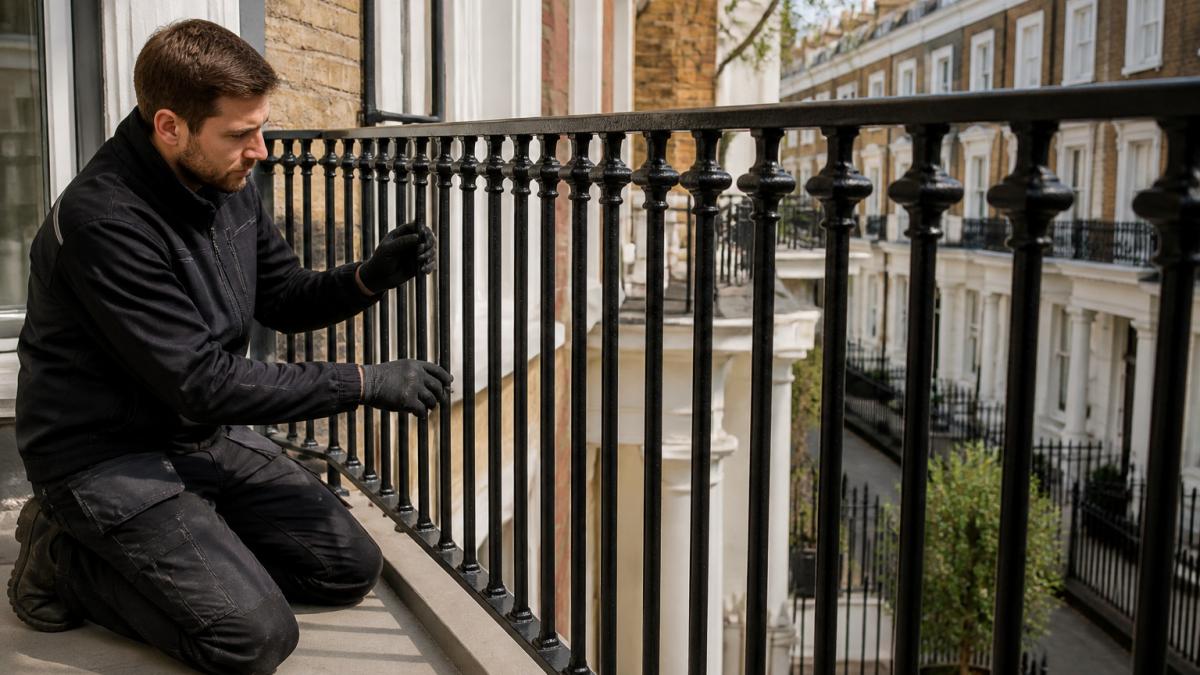
Paint remains a practical option for on-site touch-ups and for alterations after installation, when powder coating would require the piece to be removed and oven-cured. Many clients use a powder-coated finish for the main railings and paint for minor repairs.
How Long Powder Coating Lasts Outdoors
Service life depends on the coating system, the substrate preparation, the thickness of the film and the exposure the railing faces. A figure quoted for one manufacturer, one pretreatment method or one environment should be checked against its own documentation rather than applied universally, so we avoid promising a fixed lifespan here. What we can do is explain what drives longevity and how to judge when a railing needs attention.
The Four Factors That Decide Longevity
- Pretreatment and substrate protection. A galvanised base with a powder topcoat will generally outlast a powder coat on bare mild steel in the same location, because the zinc layer continues to protect the steel if the powder is breached.
- Coating system and film thickness. A single-coat decorative powder and a multi-coat system with a primer are not equivalent. Thicker, correctly specified systems tolerate more wear at high-contact points.
- Environment. A sheltered internal balustrade, a railing under a porch, a south-facing railing in full sun and a railing beside a busy road or on a coastal elevation are four different durability problems.
- Use and maintenance. A railing that is cleaned periodically and inspected after storms will generally outlast one left to accumulate grime and unnoticed chips.
Matching the Coating System to the Environment
A useful way to think about specification is to match the coating system to the exposure the railing will actually face:
- Coastal salt exposure. Salt spray is aggressive and accelerates corrosion at any breach. A galvanised base with a powder topcoat and a pretreatment suited to coastal conditions is the sensible specification. Fixings and cut edges deserve particular attention.
- Industrial and urban pollution. Sulphur compounds and particulates settle on surfaces and hold moisture. Regular washing matters more here, and a coating with good chemical resistance is worth specifying.
- Freeze-thaw cycles. Water trapped in joints and at fixings expands when it freezes, which can open small gaps and stress the coating. Good detailing that avoids water traps is as important as the powder itself.
- High-UV locations. South-facing railings in full sun are the test for colour and gloss retention. A powder formulated for exterior UV exposure will hold colour better than an interior-grade product.
Repair, Recoating and End-of-Life Decisions
Powder coating is repairable, but not invisibly. Small chips and scratches can be touched up with a compatible product to stop corrosion starting. Larger areas of damage, or coating that has lifted and allowed corrosion to spread beneath it, need professional assessment.
A practical decision framework:
- Isolated chips and scratches: touch up promptly with a compatible product.
- Localised damage or corrosion at a joint or fixing: have the area assessed and repaired before it spreads.
- Widespread flaking, lifting or corrosion beneath the film: plan for professional recoating or replacement.
- Colour or gloss loss without film failure: often cosmetic, but worth reviewing against the original specification.
Longevity is driven by three things you can actually control: proper pretreatment, a coating system matched to the environment, and prompt repair of damage. Ask any finisher to explain all three before you commit.
If you would like your existing railings assessed, we can arrange a free site survey, review the coating condition and advise on repair, recoating or replacement.
How to Maintain Powder-Coated Railings
Maintenance is straightforward. Wash railings periodically to remove salt, pollution and bird droppings, which can etch the surface if left to dry. For a deeper guide, read how to prevent rust on metal railings.
Inspect railings once or twice a year, paying attention to welds, bolt fixings and lower sections where moisture collects. Any chip or scratch that exposes bare steel should be touched up quickly with a compatible product to stop corrosion starting underneath. For a deeper guide on preventing rust once you know the basics, see our article on How to Prevent Rust on Metal Railings.
Factors That Shape the Cost of Powder-Coated Railings and Requesting a Bespoke Quote
We do not publish fixed prices, because every railing, gate or balustrade is made to measure.
Because of this, the most accurate way to understand cost is a bespoke quote based on your actual drawings or measurements. If you would like to discuss your project, you can view our Metal Railings range to match your needs, then get a free quote today.
Frequently Asked Questions
What is powder coating steel?
Powder coating is a dry finishing process in which finely ground pigment and resin particles are electrostatically charged, sprayed onto cleaned steel, and then cured in an oven. The heat melts the powder into a continuous, hard film. Unlike wet paint, it contains no solvents to evaporate, so it produces a thicker, more uniform coat in one pass. For railings, this means a tough finish that resists knocks and weathering better than most liquid paints. The quality of the surface preparation before spraying largely determines how well the finish performs over time.
Can powder coating prevent rust on steel railings?
Powder coating acts as a barrier that stops moisture and oxygen reaching the steel beneath, which is what prevents rust. However, the coating does not make the steel immune to corrosion. If the film is chipped, scratched deeply or poorly applied, water can get underneath and corrosion can start from the exposed area. For this reason, proper pretreatment, a suitable coating thickness and regular inspection matter as much as the powder itself. Galvanising the steel before coating adds a second layer of protection, which is particularly useful for railings in exposed or coastal locations.
Is powder-coated steel better than galvanised steel for railings?
Neither is universally better; the right choice depends on the environment and the look you want. Galvanised steel offers sacrificial zinc protection that continues to guard the metal even when scratched, and it suits exposed locations well. Powder coating provides a wide range of colours and a smooth, durable finish. Many fabricators combine the two, galvanising first and then powder coating, to get both corrosion resistance and an attractive finish. A bespoke survey can establish which combination suits your particular site and design.
Is powder coating better than paint for steel railings?
Powder coating is generally more durable than conventional liquid paint on steel railings. It creates a thicker, tougher film with better impact and abrasion resistance, and because it is applied without solvents, it can achieve a more even finish with fewer runs or thin spots. Liquid paint remains useful for touch-ups and certain site conditions, but for a long-term finish on railings exposed to the weather, powder coating typically needs less frequent refinishing. The overall performance still depends heavily on preparation and curing quality.
