Last Updated: November 14, 2026
Quick Summary
A bespoke metal gate for period properties should be designed around the building’s era, proportions, brickwork and existing railings so it looks original rather than added later. Victorian designs are typically more ornate, Edwardian lighter and more restrained, and Georgian simpler and geometric. Listed or conservation-area status should be checked before any gate is made.
- Measure the opening, pillar height and adjoining railing height before designing the gate.
- Victorian gates suit decorative panels, repeated motifs and defined top rails.
- Use decorative detail sparingly, as a few well-placed elements look more convincing.
- Confirm whether listed building consent or conservation area rules apply before manufacture.
- Galvanising with a powder-coated topcoat helps metal resist rust in the weather.
Table of Contents
- Why Period Properties Need Gates Designed Around Their Architecture
- Victorian Metal Gates: Key Design Characteristics by Era
- Choosing Wrought Iron Gates for Period Homes
- Planning Permission, Listed Building Consent and Conservation Areas
- Galvanised and Powder-Coated Gates: Finishes That Last
- Factors That Shape the Cost of a Bespoke Gate and How to Request a Quote
- Booking a Free Site Survey for Your Period Property Gate
- Frequently Asked Questions
Why Period Properties Need Gates Designed Around Their Architecture
A period property gate has to look like it was always there. A bespoke metal gate design for a period property starts with reading the building first: its era, its proportions, its brickwork and its existing railings. A gate that ignores these details will look like an afterthought, however well it is made.
Gate design is the first thing a visitor sees, and on a Victorian or Edwardian terrace it sets the tone for the whole frontage. A gate that suits the architecture reinforces the property’s character, while one that clashes with it can undermine an otherwise carefully restored façade.
Design comes first, but the gate also has to work in daily use. It must open smoothly, sit square between its pillars and hold up in London’s weather for years. Good period design balances historical accuracy with those practical demands.
Victorian Metal Gates: Key Design Characteristics by Era
Victorian metalwork is often more ornate than earlier styles, with a strong emphasis on decorative panels, repeated motifs and well-defined top rails. You can compare designs from different eras across our collection of metal gate articles. Edwardian designs tend to be a little lighter and more restrained, while Georgian pieces are typically simpler and more geometric. Knowing which era your property belongs to is the starting point for any authentic design.
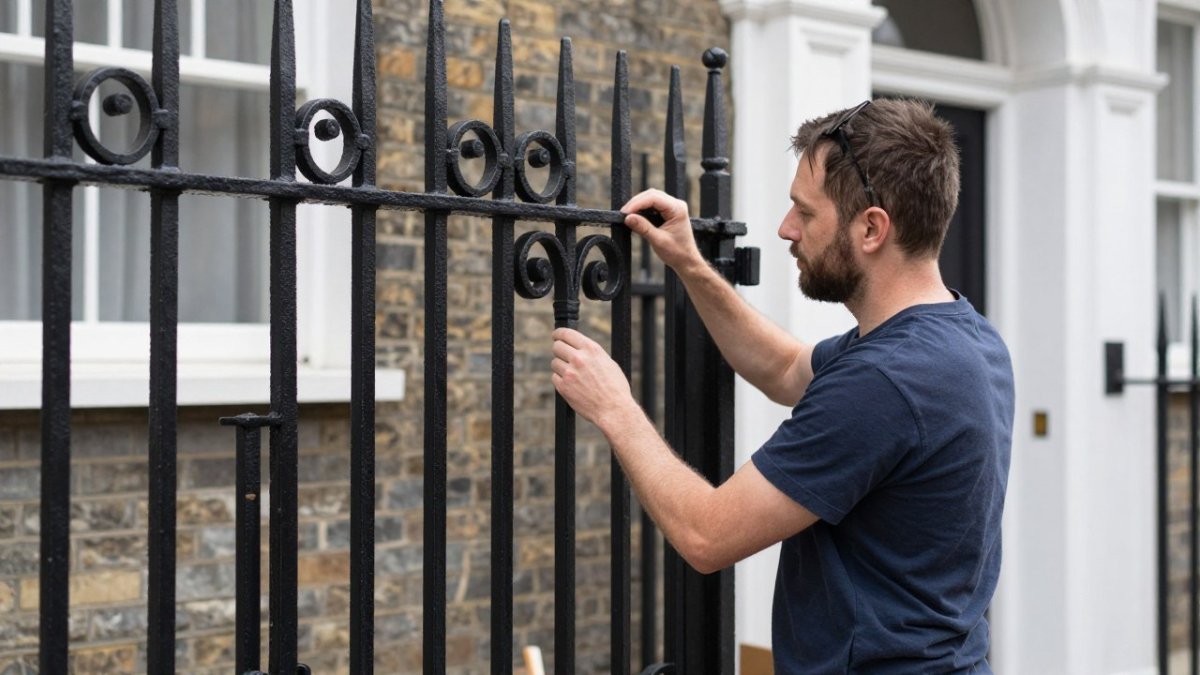
Many London terraces combine several influences, so the goal is to choose a design that reflects the dominant period of the building rather than mixing styles at random. A mismatch between a Georgian door and a heavily scrolled Victorian gate is one of the most common errors we see when period properties are retrofitted.
Scrollwork, Finials and Fleur-de-Lis Details
Scrollwork is the most recognisable feature of traditional metal gates. Simple curls suit later Victorian and Edwardian homes, while more elaborate C-scrolls and leaf forms work well on larger properties. Finials on the top rail or gate posts add a finishing touch, and fleur-de-lis motifs can give a gate a more formal, classical feel.
Decorative detail should be used with restraint. A small number of well-placed elements usually looks more convincing than a gate covered in ornament from end to end.
Matching Gate Proportions to Your Façade
Proportion matters as much as ornament. A gate that is too tall or too wide for its pillars will look out of place, however beautiful the scrollwork. Measure the opening, the pillar height and the height of the adjoining railings, then design the gate to sit comfortably within those dimensions.
The article distinguishes the main design traits of each period, which can be summarised for quick reference:
| Era | Typical design character | Key feature |
|---|---|---|
| Victorian | More ornate, repeated motifs | Decorative panels and defined top rails |
| Edwardian | Lighter and more restrained | Simpler decorative balance |
| Georgian | Simpler and geometric | Clean, geometric forms |
Choosing Wrought Iron Gates for Period Homes
Wrought iron is the traditional material for period gates, and it remains a strong choice for authentic restoration. It can be forged into fine detail, it is durable when properly protected, and it suits the hand-finished look many period homes call for. Mild steel offers a similar appearance at a lower weight and is often used for larger driveway gates where strength and cost both matter.
When choosing a material, consider the exposure of the site, the level of detail required and how the gate will be maintained over time. Wrought iron and mild steel both benefit from galvanising and a quality powder-coated finish. Stainless steel is another option, though it has a different visual character and is less common on traditional frontages.
Planning Permission, Listed Building Consent and Conservation Areas
Most period properties in London sit inside a conservation area, and a good number are listed. Before any bespoke gate is drawn, it is worth establishing which regime applies, because the answer changes what you can build and how long the project will take.
Listed buildings and listed building consent
If the property is listed, any alteration that affects its character as a building of special architectural or historic interest may need listed building consent. That can include replacing a boundary gate, changing its material, or adding automation to an existing gate. Consent is handled by the local planning authority, and Work carried out without consent when it was needed is treated seriously, so confirm the position before manufacture rather than after installation.
Conservation areas and boundary treatments
Conservation areas introduce additional controls, and boundary treatments such as gates, walls and railings are often specifically mentioned in local design guidance. Some authorities expect gates to follow established patterns in the street; others are more permissive where the design is clearly reversible or matches existing metalwork. The practical step is to check the local authority’s conservation area appraisal and any article 4 direction that applies to the property, then speak to the conservation officer early.
How to check before you commission
A sensible sequence is: confirm whether the property is listed using the National Heritage List for England; check whether it falls within a conservation area via the local authority’s mapping; read any design guidance for that area; and, where the position is unclear, request pre-application advice from the council. Keep a record of what you are told, because it informs the drawings and the specification.
Watch out: assuming a like-for-like replacement needs no consent is a common and expensive error on listed properties, where even a change of finish can be treated as an alteration.
Galvanised and Powder-Coated Gates: Finishes That Last
Finish is one of the most important decisions in a bespoke gate project, because it determines how well the metal resists rust over the years. Galvanising coats the steel in zinc, and a powder-coated topcoat adds colour and an additional layer of defence against the weather. You can see these finish options in practice on our galvanised and powder-coated metalwork page for London. A powder-coated topcoat then adds colour and an additional layer of defence against the weather.
Maintenance is still required. Inspect the finish regularly, touch up any chips promptly and keep the gate clean, particularly in coastal or heavily polluted areas. A well-specified galvanised and powder-coated gate can look good for many years with only modest care.
Factors That Shape the Cost of a Bespoke Gate and How to Request a Quote
We do not publish fixed prices, because every period property gate is different. What we can do is explain what drives the figure and how a project typically runs, so you can brief a fabricator properly and compare quotes on a like-for-like basis.
What changes the cost
The main variables are the gate’s size and opening width, the material (wrought iron, mild steel or stainless steel), the amount of hand-forged detail such as scrollwork and finials, the finish specified, and the difficulty of installation. Access, ground conditions, the condition of existing pillars, and the need to match adjoining railings all affect the final figure. Automation, if required, is a separate consideration and should be priced alongside the gate rather than after it.
A typical project sequence
A bespoke gate usually moves through these stages: an initial enquiry and site survey; a design proposal with drawings for approval; confirmation of specification, finish and ironmongery; fabrication; and installation. Timelines vary with complexity and with any consent requirements, so ask for an indicative programme at the quote stage and build in time for council responses where listed building consent or conservation area advice is needed.
How to brief a fabricator
Bring reference images, the era of the property, the dimensions of the opening if you have them, and any photographs of existing railings or pillars. Be clear about how the gate will be used, pedestrian only, vehicle access, or both, and whether automation is planned now or later. Confirm what is included in the quote: drawings, finish, hinges, latches, installation and making good.
Requesting a quote
The most useful next step is a bespoke quote based on your property and requirements. Contact us to discuss your project, arrange a free site survey, and receive a quote tailored to your frontage, with the specification and finish set out clearly so you can compare it against other proposals.
Booking a Free Site Survey for Your Period Property Gate
A site survey helps produce an accurate design. Contact us to discuss your project and arrange a free site survey.
If you are planning a gate for a period home in London, get a free quote today and contact us to arrange a survey. You can also explore our bespoke metal gates and railings range to see how we approach period designs, or read our metal railing installation cost estimate guide to understand the factors that affect pricing.
Metal Railings London designs and fabricates bespoke gates for period homes, with each piece made to measure and finished to last. If your property deserves a gate that respects its history, get in touch today to book a free site survey and start your project.
Frequently Asked Questions
How do I choose a gate that suits a period property?
Start with the age and style of the house. Victorian and Edwardian frontages usually suit slender balusters, scrolled details and a restrained top rail, while Georgian homes call for simpler, more proportioned designs. Measure the wall openings and pier heights before choosing a style, and bring photographs of the façade to a site survey so the gate sits comfortably within the existing architecture.
What metal is best for a bespoke garden or driveway gate?
Wrought iron offers authentic period character and handworked detail, while mild steel is strong and cost-effective for larger driveway gates. Stainless steel suits coastal or high-moisture sites. The right choice depends on the design, the load the gate carries and the exposure of the site, so we recommend discussing the options during a consultation rather than choosing from a catalogue.
Do I need planning permission to install a gate at a period property?
It depends on the property and its location. Listed buildings normally need listed building consent for changes to their boundaries, and properties within a conservation area may face additional controls on gates and railings. Always check with your local planning authority before ordering, as the rules vary between London boroughs.
How should I maintain a powder-coated or galvanised gate?
Rinse the gate periodically to remove salt, grime and debris, particularly near roads or the coast. Check hinges, latches and fixings each year, and touch up any chipped paint promptly to stop corrosion spreading. Galvanised and powder-coated finishes need far less upkeep than untreated steel, but regular inspection still extends their working life considerably.
