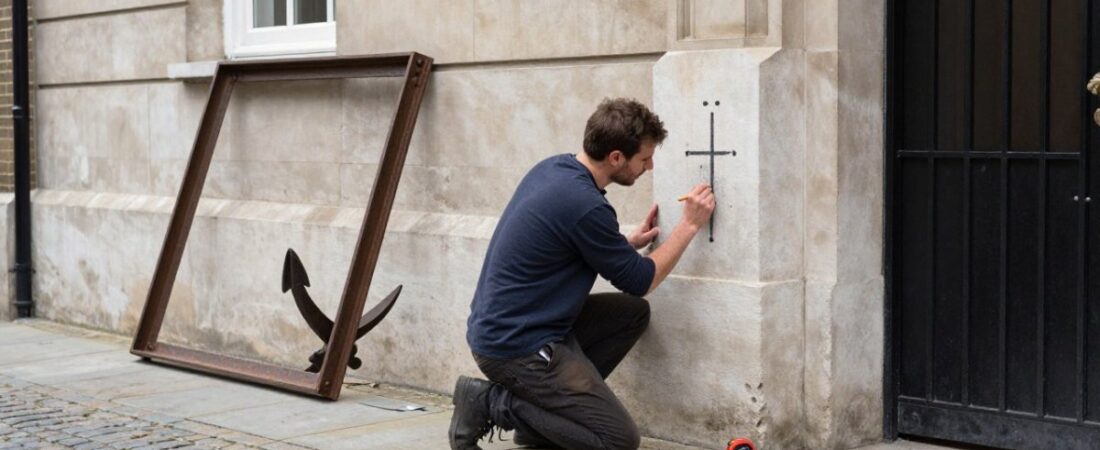
Last Updated: November 8, 2026
Quick Summary
A custom metal gate installation timeline runs from site survey to sign-off, with most of the time spent in fabrication rather than on site. Bespoke fabrication typically takes two to six weeks depending on design complexity, while installation itself often takes one to two days once the gate is ready.
- Book a site survey early to record exact opening widths, ground conditions and swing direction.
- Fabrication for a bespoke design typically runs two to six weeks, depending on complexity.
- Installation often takes one to two days once the gate is ready.
- Concrete foundations need time to cure before the gate is hung, so build in a buffer.
- Confirm the design, finish and hardware in writing before fabrication starts to avoid resetting the schedule.
Table of Contents
- How Long a Custom Metal Gate Takes From Start to Finish
- Step 1: Book a Metal Gate Site Survey
- Step 2: Plan Around Bespoke Metal Gate Lead Time
- Step 3: Prepare the Site Before Installation Day
- Step 4: Understand What Happens on Installation Day
- Why Metal Gate Installation Delays Happen and How to Avoid Them
- Booking Your Free Site Survey and Gate Quote
- Frequently Asked Questions
How Long a Custom Metal Gate Takes From Start to Finish
A custom metal gate takes a number of weeks from first contact to a finished installation, and much of that time sits in fabrication rather than on site, so a clear gate installation timeline helps you plan around it. Fabrication for a bespoke design typically runs two to six weeks, depending on how complex the design is, according to KV Welding’s Custom Metal Gate Cost Guide 2026. Installation itself is much quicker, often one to two days once the gate is ready.
That means the total timeline is shaped by the stages before and after the workshop. Planning the schedule well means understanding each stage and what can slow it down. The sections below walk through that process at Metal Railings London, one step at a time.
Step 1: Book a Metal Gate Site Survey
Every reliable timeline starts with a site survey. Before any metal is cut, someone needs to measure the opening, check the ground, and note how the gate will open and close.
Book the survey early. Before committing, learn how to choose a metal gate fabricator. A surveyor who visits the property can record exact widths, post positions, and clearances, which helps avoid rework later. A survey should cover:
- Opening width and height, measured at more than one point
- Ground type and slope across the gate line
- Access for delivery vehicles and fitters
- Whether the gate swings inward, outward, or slides
- Any existing posts, walls, or services that could be affected
Once the survey is complete, the design can be finalised, fabrication can start, and the gate installation timeline can be set with confidence.
Step 2: Plan Around Bespoke Metal Gate Lead Time
Lead time is the gap between confirming the design and the gate being ready to install. For a bespoke gate, this is where most of the schedule lives.
A made-to-measure gate needs cutting, welding, finishing, and inspection in the workshop. You can see the full range of driveway gates and what that service covers on our driveway gate range. Plan for that by agreeing the design and finish early, because late changes restart the clock. For a wider overview of the options, read our custom metal gates buying guide.
What Drives Fabrication Time
Several factors decide how long fabrication takes:
- Design complexity: Scrollwork, forged details, and ornamental panels take longer than simple flat bar designs. Security features can also change the fabrication scope, so see our secure driveway gate guide.
- Size and weight: Larger, heavier gates need more material and more handling.
- Finish: Galvanising and powder coating add steps, and each coat needs time to cure.
- Automation: Motors, hardware, and wiring can add lead time.
- Workshop schedule: A busy period can push back a start date, even for a simple job.
Asking for a clear breakdown of these stages up front makes it easier to judge realistic dates. A good fabricator will tell you which factors apply to your gate.
Timeline Differences by Gate Type
Not all gates follow the same schedule. Broadly, the more moving parts a gate has, the longer its timeline tends to be:
- Pedestrian gates: Usually the quickest to fabricate and fit.
- Single swing driveway gates: Moderate lead time, depending on width and finish.
- Double swing gates: Longer, because two leaves must be matched and hung accurately.
- Sliding gates: Often need track and ground work, which can extend the schedule.
- Automated gates: Add time for motors, wiring, and commissioning.
The table below sets out the main factors that decide how long fabrication takes, as described in the article.
| Factor | Effect on fabrication time | Note |
|---|---|---|
| Design complexity | Scrollwork and forged details take longer | Simple flat bar designs are quicker |
| Size and weight | Larger, heavier gates need more material and handling | Adds time in the workshop |
| Finish | Galvanising and powder coating add steps | Each coat needs time to cure |
| Automation | Motors, hardware and wiring add lead time | Applies only to automated gates |
| Workshop schedule | A busy period can delay the start date | Can affect even simple jobs |
Step 3: Prepare the Site Before Installation Day
Site preparation is the stage most people underestimate. The gate can be ready in the workshop, but if the ground is not prepared, installation stops. A practical pre-installation checklist keeps the schedule on track and reduces the risk of a crew arriving to find the opening is not ready.
The Pre-Installation Checklist
Work through the following before the fitters arrive:
- Clear the work area so vehicles, materials, and any lifting plant can reach the gate line without obstruction.
- Confirm the opening dimensions against the survey measurements, checking width and height at more than one point.
- Confirm post positions and that any existing posts or walls are sound enough to carry the gate.
- Locate buried services such as cables, pipes, and drainage, and have them marked before any digging starts.
- Arrange delivery access for the gate and any plant needed to lift it into position.
- Agree who handles the electrical connection if the gate is automated, and confirm the power supply is available at the gate line.
- Check access permissions where the property fronts a shared driveway, a private road, or a conservation area, and confirm any required consent is in place.
- Confirm the finish and hardware schedule in writing so nothing is substituted at the last minute.
Groundwork, Curing, and Weather Dependencies
Groundwork is often the biggest variable in the schedule. Posts usually need concrete foundations, and concrete needs time to cure before the gate can be hung. Curing time depends on the mix, the ground temperature, and the weather, so build a buffer into the schedule for wet or cold conditions. Uneven or rocky ground can also add time, because posts may need extra levelling or deeper footings.
Hanging a gate onto footings that have not cured can move the posts out of alignment.
Permits, Utility Locating, and Access Constraints
These are the practical constraints that most often catch homeowners out, and they can materially affect scheduling. Where a property is in a conservation area or fronts a highway, permitted development rights may be restricted, and listed buildings or properties in designated areas may need consent before alteration. Utility locating should be arranged before any excavation, because unmarked cables or pipes can stop groundwork until they are resolved. Access constraints, narrow entrances, shared driveways, or restricted delivery windows, should be confirmed at the survey stage so the crew and the delivery are booked for a realistic day.
Once the checklist is complete and the ground is ready, the installation can proceed without avoidable stops.
Step 4: Understand What Happens on Installation Day
On installation day, the fitters set the gate into the prepared posts, align the leaves, fit the hardware, and check that everything opens and closes smoothly. For most gates this takes one to two days.
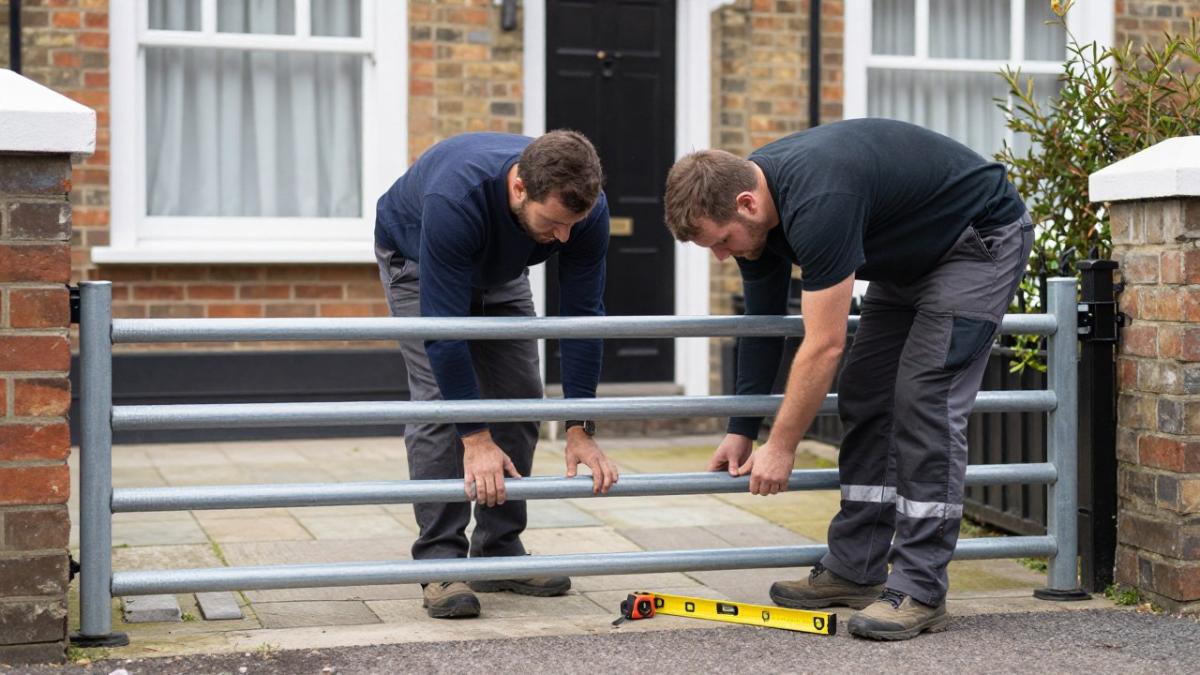
A typical sequence looks like this:
- Fit the hinges or track and hang the gate
- Adjust alignment so the gate sits square and clears the ground
- Fit latches, locks, and any handles
- Connect and test motors and controls if the gate is automated
- Check the gate through several full cycles before signing off
Expect some adjustment. Final fine-tuning often takes place once the gate has been hung and tested, so do not treat the first fit as the finish line.
Why Metal Gate Installation Delays Happen and How to Avoid Them
Most delays come from a small set of causes. Knowing them helps you plan around them, and knowing how they are managed helps you set realistic expectations for the schedule.
The Common Causes
- Incomplete measurements: A missed dimension can mean the gate must be remade.
- Late design changes: Changing the finish or pattern after fabrication starts restarts the work.
- Concrete curing: Installing too soon can damage the foundations.
- Access problems: Narrow entrances or blocked routes can delay delivery.
- Hidden services: Unmarked cables or pipes can stop groundwork until resolved.
- Supplier delays: Motors, hardware, and specialist finishes can arrive later than planned.
Change Orders and Design Approvals
A change order is any alteration to the agreed design, finish, or hardware after fabrication has started. Each one resets part of the schedule, because material may need reordering and workshop time rebooked. The practical defence is to confirm the design in writing before fabrication begins, including the finish, hardware schedule, and opening direction, and to treat any later change as a formal revision with a revised date.
Communication and Delay Management
Clear communication with the fabricator matters as much as the technical preparation. Ask for regular updates at agreed points, after the survey, at design sign-off, at the start of fabrication, and before the installation date, so you can spot problems while they are still small. When a date does shift, you should expect to be told why and given a revised date. Agreeing the update points at the outset makes that easier for both sides.
Building a Realistic Buffer
Reduce the risk by confirming the design in writing before fabrication, scheduling the survey early, and keeping a short buffer in your timeline for curing and weather. A buffer of a few days around the installation date absorbs most minor slips without moving the whole project.
Booking Your Free Site Survey and Gate Quote
A realistic timeline starts with an accurate survey. At Metal Railings London, we offer a free site survey and quote for bespoke gates, railings, and balustrades across London. Our survey covers the opening, the ground and the design, so you have a clearer picture of the likely schedule before you commit. When you are ready, you can get a free metalwork quote for your project.
Get a free metalwork quote today and we will help you plan each stage of your gate project.
Frequently Asked Questions
How long does it take to install a custom metal gate?
Installation on site is usually quick once the gate is ready. Fitting the gate posts, hanging the gate and fixing hardware depends on access, ground conditions and whether automation or electrical work is included. Concrete used for posts needs time to cure before the gate is hung, so the overall window can extend. Metal Railings London can confirm the expected installation duration for your specific property during a free site survey.
How long does it take to manufacture a bespoke metal gate?
Fabrication time for a bespoke metal gate depends on the design, the size of the gate, the finish required and how many other projects are in the workshop. Simple designs move through cutting, welding and assembly faster than gates with forged details or complex ornamental work. Powder coating and galvanising also add time to the schedule. Your bespoke metal gate lead time is confirmed when the design and measurements are signed off.
What happens during a metal gate site survey?
A metal gate site survey involves measuring the opening, checking the condition and level of the ground, assessing the existing posts or wall, and noting access for delivery and installation. The surveyor also discusses the design, opening direction, automation options and any electrical supply needed. Accurate measurements taken at this stage reduce the risk of fitting problems and avoid delays once fabrication has started.
What can delay a custom gate installation?
The most common causes of delay are inaccurate measurements, late design changes, unsuitable ground conditions, existing posts that are out of position, and awaiting access or electrical connections. Weather that prevents concrete from setting can also hold up the programme. Agreeing the design and confirming the site details early keeps metal gate installation delays to a minimum.
